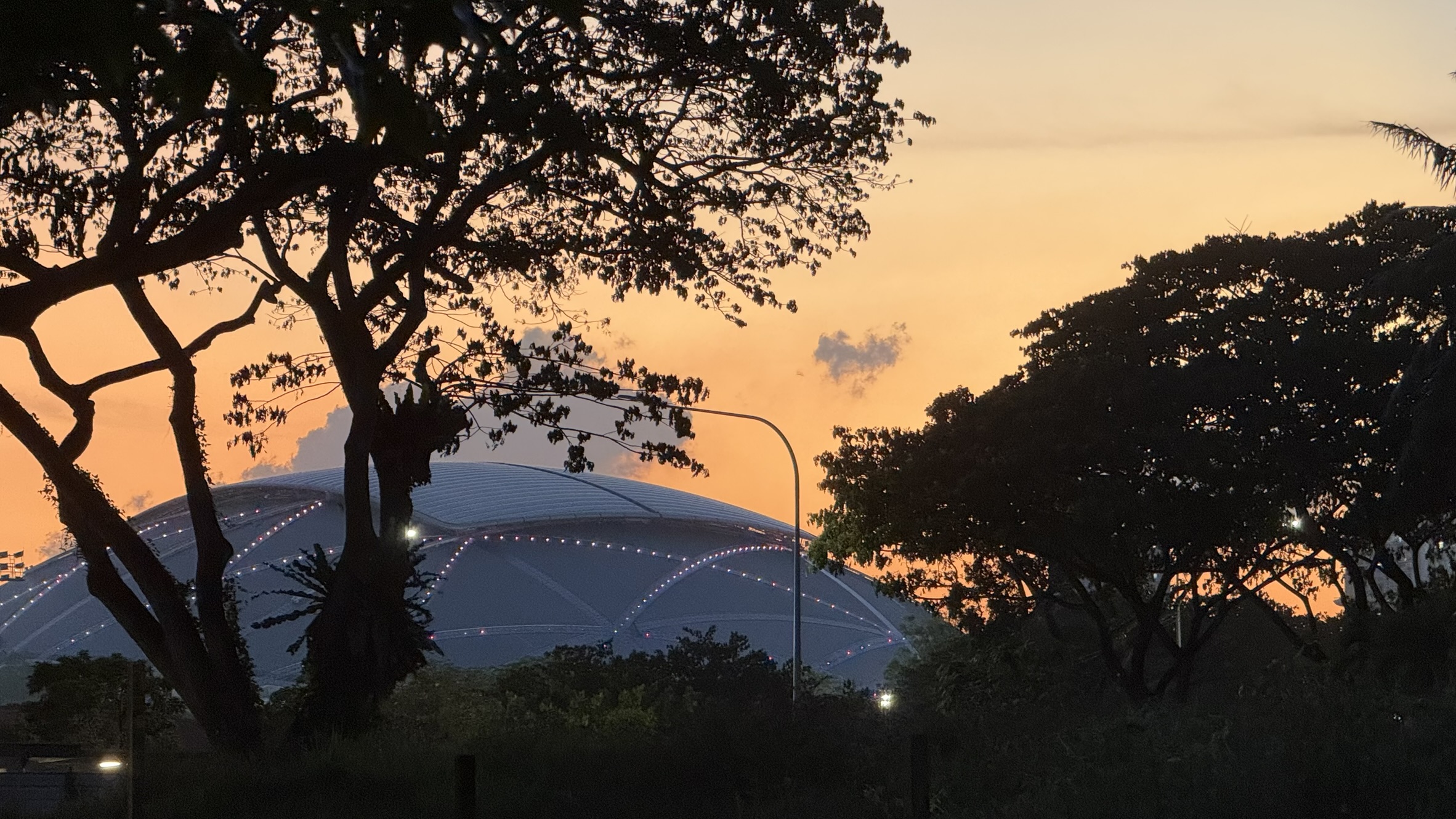
The frequent appearance of evening glow in Singapore has a lot to do with its geography, climate, and atmospheric conditions.
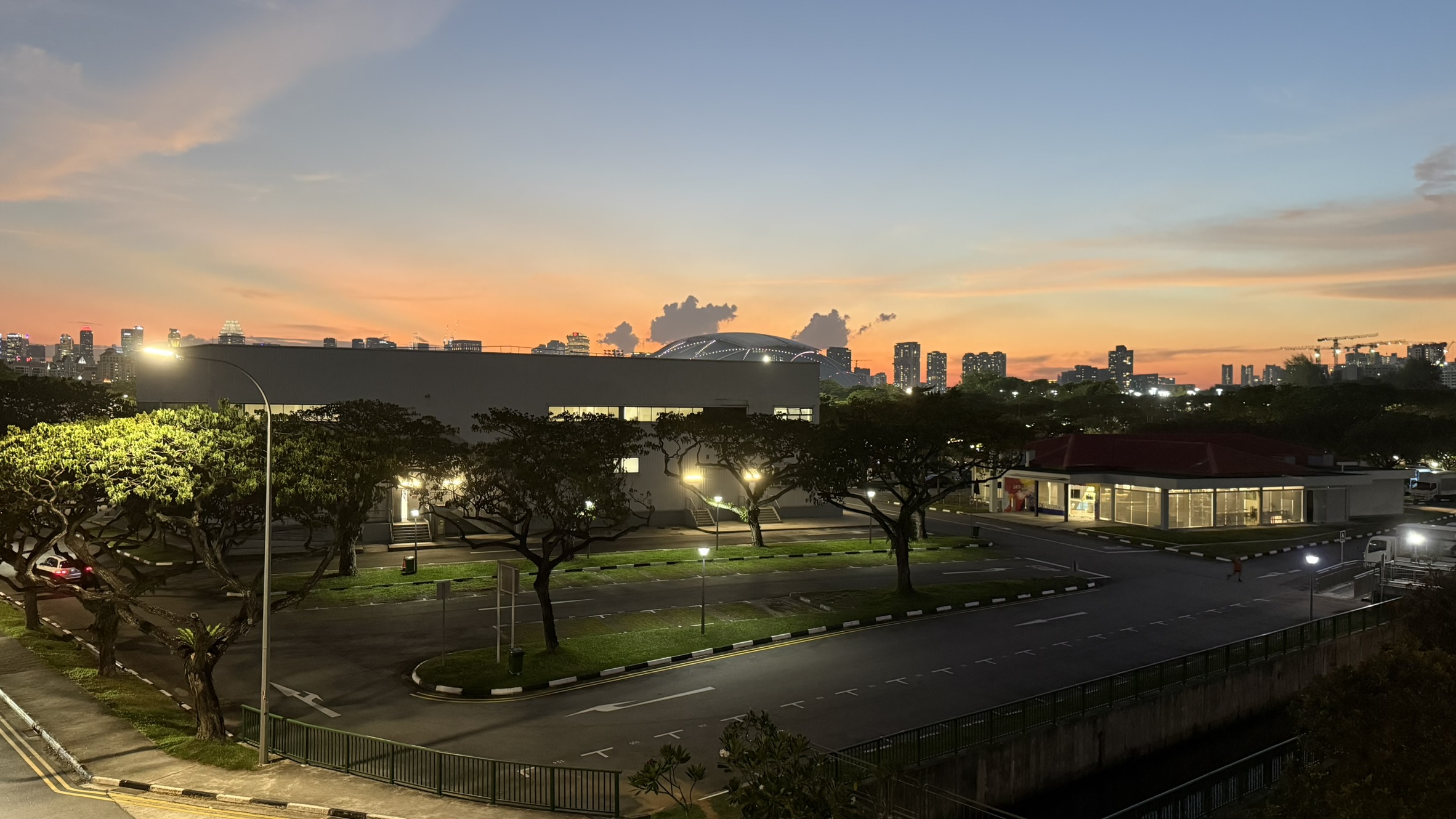
Singapore lies almost on the equator. The sun sets very quickly, almost straight down, creating sharper angles for light scattering. With high humidity and cloud cover common in the tropics, the conditions are often right for scattering sunlight into brilliant reds, oranges, and purples.
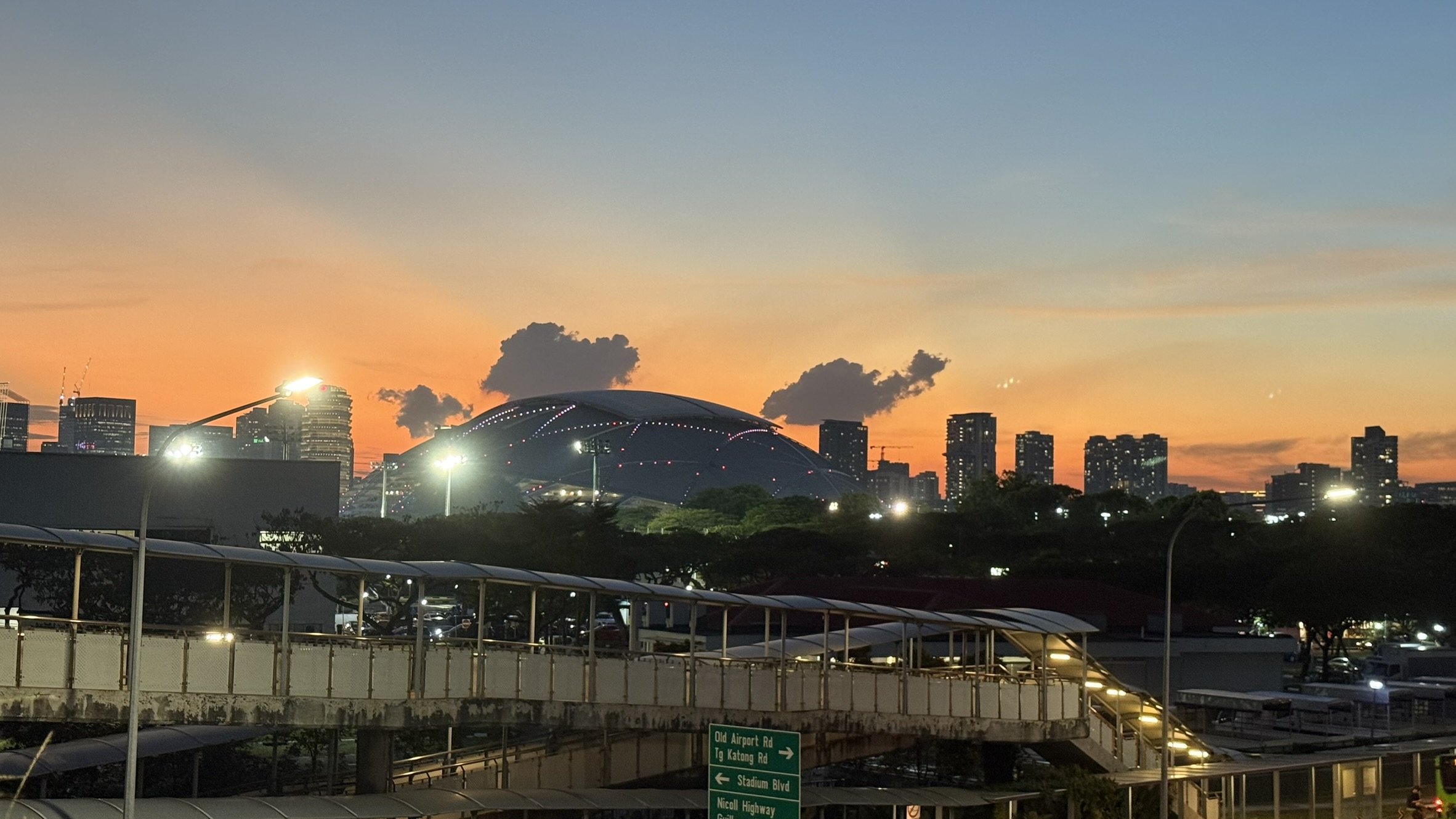
Singapore’s warm, moist air rises and forms cumulus and stratocumulus clouds in the late afternoon. At sunset, these clouds act like giant “canvases”, reflecting and scattering sunlight.
When the sun is low on the horizon, its light travels a longer path through the atmosphere. Rayleigh scattering removes much of the shorter blue wavelengths, leaving longer red and orange wavelengths to dominate. In humid air with fine particles (from sea salt, urban activity, or even haze), Mie scattering enhances warm colors, intensifying the glow. Some evenings, fine aerosols (from marine winds, forest fires in the region, or urban pollution) increase scattering, making the colors more vivid. Unlike heavy pollution that blocks light, small amounts of particles actually make sunsets more colorful.
Tropical convection often creates afternoon thunderstorms. After rain, the atmosphere is cleared of larger dust but still holds fine water droplets, creating conditions for an especially striking evening glow. That’s why after a storm, Singapore’s skies often glow beautifully.
 Above the Equator
Leave a comment